The problem
The Singapore Nursing Board registers about 3,000 nurses and handles 5,000 applications a year with a team of 10. Getting registered took around six months, and licensure exam processing took four.
Most of those six months was waiting, not work. Nurses waited for a paper exam to be held in a city they could travel to. Then came about a month for the paperwork to go through, a wait for results, and another month of processing the registration once they passed.
What I did
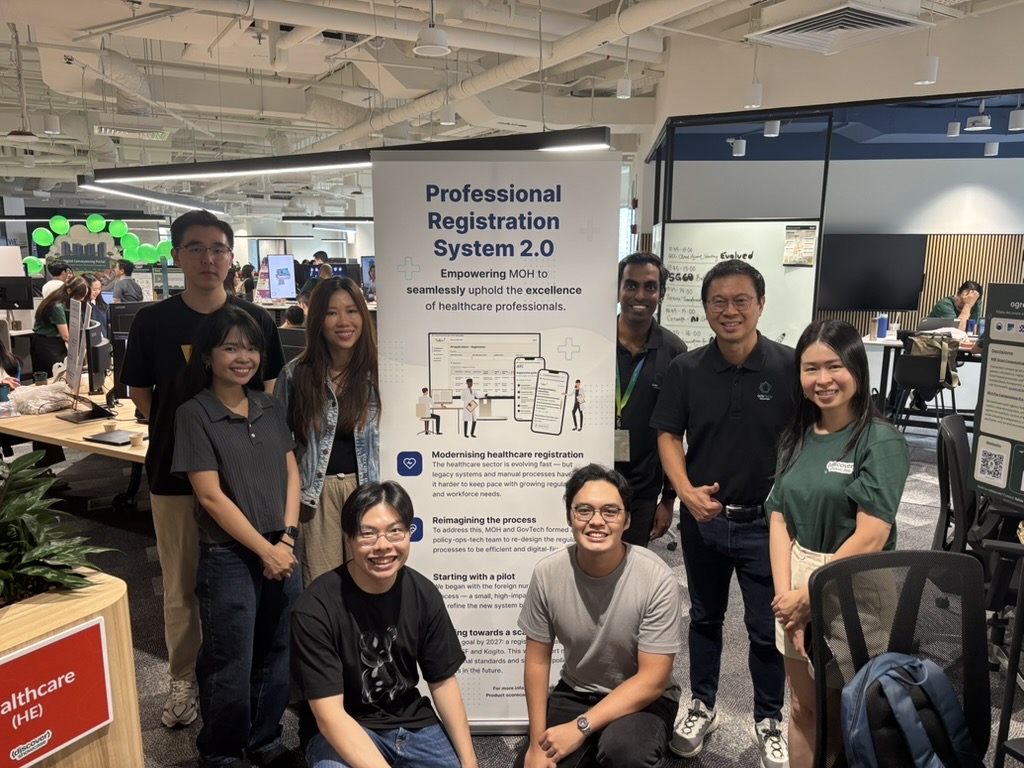
I own PRS 2.0, the Professional Registration System, end to end, leading a 20-person cross-functional team with the Ministry of Health and the Board as regulators. Rather than digitise the existing flow, we sat with the Board to diagnose where the friction was and co-designed automated routing for applications.
The key decision
We automated the happy paths and deliberately left the unhappy ones with people. Where the rules were clear and could be applied deterministically, and we had structured data from authoritative sources such as Singpass, the Ministry of Home Affairs, local schools and our own historical records, the system decides. Anything that could lead to a rejection, or needs to be handled with care like removal from the register, still goes to a Board officer.
Outcome
Time to registration dropped from six months to one (83 percent faster) and licensure exam processing halved, from four months to two. We're now extending the platform to other professional boards, starting with the Singapore Medical Council, with a target of automating 30 roles by 2027.